
Cyrus says their final conversation was about the album that became “Bass Persuades,” and she has since honored Parton onstage at the Hollywood Bowl.
Miley Cyrus has revealed that her final conversation with her godmother, Dolly Parton, was about the music that became her 10th studio album, “Bass Persuades.” Cyrus said she had been sharing the new record with the country star shortly before Parton’s death in August.
Cyrus addressed her dialogue with Zane Lowe during an Apple Music interview that dropped on Sept. 17, just ahead of the album’s debut. Reflecting on their final interaction, she shared that “it was actually me telling her about this record.” Ever since, Cyrus has integrated this sorrow as a recurring element of her public engagements, most prominently during her October performance at the Hollywood Bowl in Los Angeles.
A final conversation about new music
In the interview, taped at Apple Music’s Los Angeles studio, Cyrus shared that Parton had consistently been the initial recipient of a vinyl pressing for every fresh record she produced. She mentioned her ongoing intention to dispatch one for this project as well, striving to keep her composure throughout the discussion, CNN reported.
During their most recent chat, Cyrus mentioned, Parton noted, they discussed their contrasting performance styles and how those disparities actually created a strong artistic synergy. Describing Parton as an exceptionally wise counselor, Cyrus highlighted how the country icon consistently offered sound guidance—even during difficult slumps when she urged Cyrus to dress up, style her hair, and return to the spotlight.
She additionally reflected upon the way Parton managed celebrity status. Cyrus observed that Parton was renowned for the artifice inherent in her public image—her voluminous hair and signature makeup—and stated that this example assisted her in grasping how an onstage persona and a private identity are able to coexist peacefully, ensuring neither eclipses the other.
Cyrus also recounted a call she received after Parton saw her cry while singing “End of the World” on David Letterman’s interview series “My Next Guest Needs No Introduction.” According to Cyrus, Parton told her that music is an escape for audiences and that she should let the listeners do the crying. Cyrus said she answered that showing emotion was simply who she is, and that Parton accepted her for it.
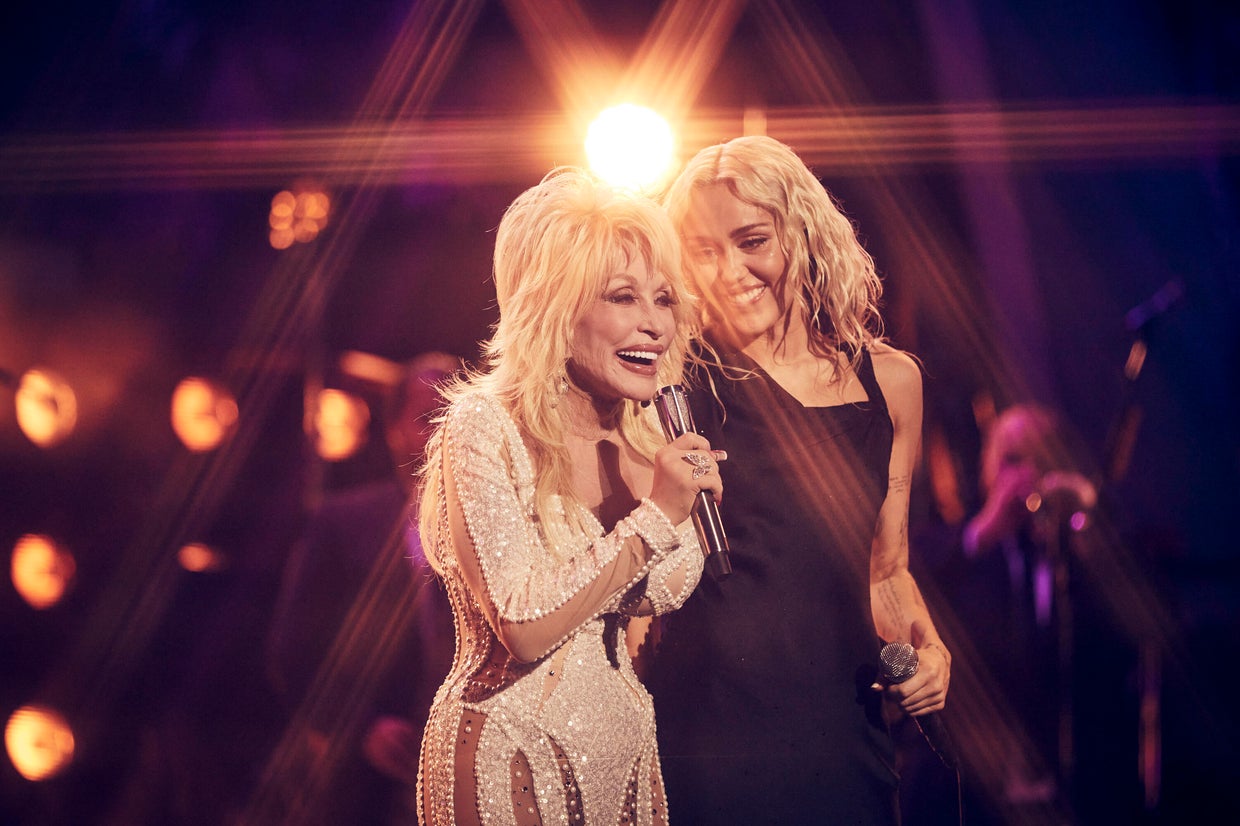
The bond between the two dates back to Cyrus’ childhood. Parton became her godmother through her friendship with Cyrus’ father, country singer Billy Ray Cyrus, and was a guiding presence during Cyrus’ years on “Hannah Montana,” the Disney Channel series that made her famous. Over the years they performed together often, including on Cyrus’ NBC New Year’s Eve specials.
The passing of Parton in August
Parton died on Tuesday, Aug. 25, in Nashville at age 80. Her nephew and longtime head of security, Bryan Seaver, announced the news in a video on behalf of the Parton and Owens families, calling the moment “an honor that is mixed with absolute pride and great sadness,” Billboard reported. Her representatives later told People that she had died after a brief battle with cancer at Vanderbilt-Ingram Cancer Center, where she had been admitted four days earlier; the type of cancer was not disclosed.
Her decline had been visible for months. In May, she called off a planned Las Vegas residency, citing unspecified health problems, and her last public appearance came in June at the opening of her Tennessean Travel Stop in Cornersville, Tennessee. Parton had also been grieving her husband, Carl Dean, who died in March 2025. The family planned a private service and asked admirers to donate to Dolly Parton’s Imagination Library, her children’s book program, instead of sending flowers.
Cyrus responded publicly the following morning through an Instagram post, sharing that the passing of her “Aunt Dolly” was an experience too profound to fully articulate. She concluded her message with a heartfelt pledge: “I will always love her and want to make her proud.”
A tearful tribute at the Hollywood Bowl
That promise became the emotional center of Cyrus’ concert at the Hollywood Bowl on Friday, Oct. 16, one of two shows she had scheduled at the venue to celebrate the new album. She had announced both the record and the Los Angeles dates at the start of September, barely a week after Parton’s death. She performed Parton’s “Jolene” and, through tears, spoke about feeling her godmother’s presence. “Me and Dolly, we are eternal,” she told the crowd, ABC7 reported. She added that she expected to see Parton again.
Cyrus additionally shared with the crowd that Parton had previously asked her to perform alongside her at that very location, though she turned down the offer to experience the concert purely as an attendee.
During that very same concert, as reported by American Songwriter, Cyrus recounted what she took to be an omen sent by Parton. She shared that she found herself alone alongside a mannequin of Parton gifted to her for Christmas, played “Jolene,” burned a candle, and mentally requested the illumination to waver should Parton be present, whereupon corridor lights proceeded to flutter. She noted that her bandmates witnessed the occurrence firsthand.
The record Cyrus described to her godmother in their final conversation arrived less than four weeks after Parton’s death, and each stop in its promotion, from the Apple Music interview to the Hollywood Bowl stage, has also become a moment for Cyrus to speak about the woman she calls Aunt Dolly.