
Few names evoke such widespread creative admiration and dialogue within contemporary fashion as Alexander McQueen. As a visionary British designer, McQueen’s brief yet influential career challenged conventions, reshaped sartorial discourse, and set design benchmarks that still guide creators worldwide. This article examines his transformative influence on modern fashion, highlighting signature methods, bold thematic experimentation, boundary‑defying narrative expression, and the lasting impact that continues to resonate on today’s runways and far beyond.
The Craft Behind Technical Excellence
A central pillar of Alexander McQueen’s legacy is his unwavering dedication to supreme technical mastery, and his training as a Savile Row tailor gave him an exceptional command of garment construction that few peers could match. This foundation allowed him to merge traditional craftsmanship with bold, unconventional reinterpretations, infusing his designs with historical echoes while driving them into the future through innovative, avant‑garde silhouettes.
For example, McQueen’s Spring/Summer 1999 collection featured razor-sharp tailoring juxtaposed against billowing, sculptural forms. His use of the “bumster” trouser, characterized by an exceptionally low waistline, challenged the prevailing silhouettes of the 1990s and influenced both luxury and high-street designs for years afterward. The technical complexity of his garments, such as the spiral-cut dresses and precisely engineered feathers from the Autumn/Winter 2008 “The Girl Who Lived in the Tree” collection, became benchmarks that encouraged peers and proteges to strive for similar innovation in craftsmanship.
Storytelling Through Theatricality
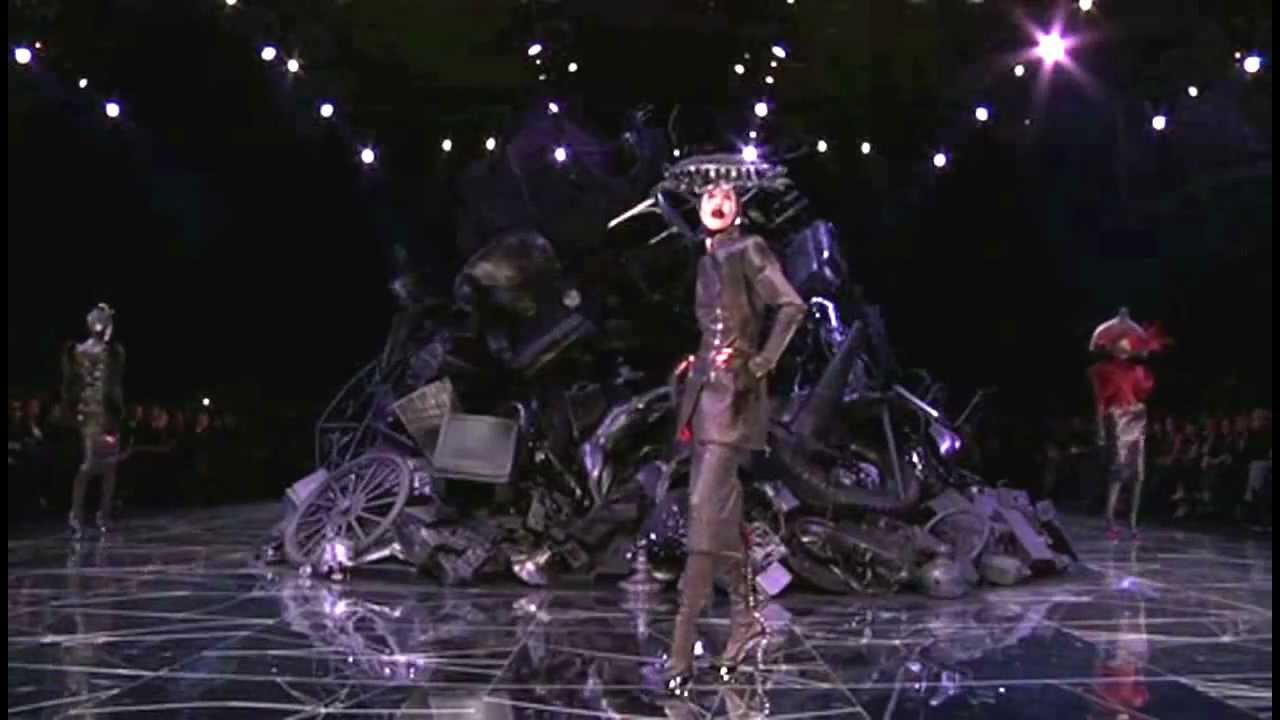
Emphasizing not just apparel but experience, McQueen revolutionized the fashion show format. His presentations were immersive, almost operatic explorations of dark beauty, mortality, romanticism, and human struggle. Rather than simply displaying collections, McQueen’s runway shows—such as the Spring/Summer 2001 “Voss,” featuring models inside a glass box—aired as poignant, sometimes unsettling narratives that left lasting cultural impressions.
This storytelling approach set a precedent embraced by subsequent designers and brands. Fashion week events transformed from simple showcases to multidimensional spectacles, raising expectations for how clothing collections should be introduced to the world. The thematic unity and psychological depth of McQueen’s shows inspired brands such as Valentino and Maison Margiela to invest more heavily in narrative-driven presentations. Moreover, the emotive, conceptual approach to garment design now permeates the collections of emerging creatives worldwide, reflecting McQueen’s sustainable legacy in the art of fashion theater.
Expanding the Frontiers of Aesthetic and Cultural Expression
McQueen consistently confronted difficult themes, often weaving allusions to history, the natural world, and contentious social debates into his creations. His Autumn/Winter 1995 “Highland Rape” collection, for example, drew on the historical trauma of Scotland’s Clearances, blending shredded lace with weathered tartan to deliver a powerful reflection on oppression and identity.
Through such collections, McQueen broadened the definition of what fashion could express—facilitating discussions around gender, power, and vulnerability. His aesthetic frequently subverted traditional ideas of beauty; for example, the “Widows of Culloden” (Autumn/Winter 2006) show seen as a meditation on loss, blended Victorian mourning attire with fiercely modern sensibilities. These stark juxtapositions and bold dialogues have emboldened contemporary designers such as Gareth Pugh and Iris van Herpen to create works that traverse conventional boundaries between art, fashion, and activism.
Advances in Sustainable Practices and Emerging Technologies
While widely praised for its theatrical flair and conceptual depth, McQueen’s impact also reaches into fashion’s technological and ecological shifts, where his explorations of unconventional materials—from molded glass and shells to living components—anticipated the contemporary pursuit of inventive, eco-conscious substitutes for classic fabrics. The Spring/Summer 2010 “Plato’s Atlantis” collection, famed for unveiling the now-iconic “armadillo” boots, incorporated computer-crafted prints and 3D scanning, helping chart the course for future unions between advanced technology and haute couture.
Modern labels increasingly acknowledge both environmental responsibilities and technological possibilities, a conversation McQueen ignited through his fearless design ethos. His studio’s early, responsible production techniques and openness to new materials have inspired a generation of designers focused on sustainable luxury and digital creativity.
Enduring Legacy in Fashion Education and Mentorship
McQueen’s reach further extends into fashion’s educational sector and mentorship networks. As a Central Saint Martins alum, he connected artistry with technical prowess for today’s aspiring designers. His archival works are mainstays in museum retrospectives and design syllabi across the world. Former collaborators—including Sarah Burton, who succeeded him as creative director—have gone on to shape the house of McQueen and influence adjacent brands while upholding his standards of excellence and innovation.
The global reverberations of McQueen’s approach can be seen in the rise of interdisciplinary studies fusing digital arts with fashion and the encouragement of students to tackle provocative topics. Institutions like the Fashion Institute of Technology and the Royal College of Art draw direct inspiration from McQueen’s boundary-defying philosophies, nurturing a new generation intent on questioning, disrupting, and rebuilding fashion’s purpose.
Alexander McQueen’s impact on modern fashion spans the industry’s technical, artistic, and philosophical realms, his pioneering vision evident in each precision-crafted silhouette, every dramatic runway display, and each bold venture into provocative themes. His work continues to guide the ambitions and creative output of designers and artists around the world. By fearlessly confronting tradition and encouraging audiences to think and feel through fashion, McQueen keeps the dialogue he initiated both compelling and timely.